
Мои цитаты из книг
Главная ограниченность человеческого разума состоит в том, что он почти не в состоянии вернуться в прошлое, занять прежнюю позицию, зная о будущих переменах. Чуть только вы построили новую картину мира или его части, старая стирается – вы уже не вспомните, как и во что верили раньше.
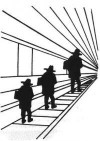
Наши действия и поступки определены нашими мыслями. Но всегда ли мы контролируем наше мышление? Нобелевский лауреат Даниэль Канеман объясняет, почему мы подчас совершаем нерациональные поступки и как мы принимаем неверные решения. У нас имеется две системы мышления. «Медленное» мышление включается, когда мы решаем задачу или выбираем товар в магазине. Обычно нам кажется, что мы уверенно контролируем эти процессы, но не будем забывать, что позади нашего сознания в фоновом режиме постоянно...
The widespread misunderstanding of randomness sometimes has significant consequences. In our article on representativeness, Amos and I cited the statistician William Feller, who illustrated the ease with which people see patterns where none exists. During the intensive rocket bombing of London in World War II, it was generally believed that the bombing could not be random because a map of the hits revealed conspicuous gaps. Some suspected that German spies were located in the unharmed areas. A careful statistical analysis revealed that the distribution of hits was typical of a random process—and typical as well in evoking a strong impression that it was not random. “To the untrained eye,” Feller remarks, “randomness appears as regularity or tendency to cluster.”
Наши действия и поступки определены нашими мыслями. Но всегда ли мы контролируем наше мышление? Нобелевский лауреат Даниэль Канеман объясняет, почему мы подчас совершаем нерациональные поступки и как мы принимаем неверные решения. У нас имеется две системы мышления. «Медленное» мышление включается, когда мы решаем задачу или выбираем товар в магазине. Обычно нам кажется, что мы уверенно контролируем эти процессы, но не будем забывать, что позади нашего сознания в фоновом режиме постоянно...
The striking finding was that people who had received a message extolling the benefits of a technology also changed their beliefs about its risks. Although they had received no relevant evidence, the technology they now liked more than before was also perceived as less risky. Similarly, respondents who were told only that the risks of a technology were mild developed a more favorable view of its benefits. The implication is clear: as the psychologist Jonathan Haidt said in another context, “The emotional tail wags the rational dog.” The affect heuristic simplifies our lives by creating a world that is much tidier than reality. Good technologies have few costs in the imaginary world we inhabit, bad technologies have no benefits, and all decisions are easy. In the real world, of course, we often face painful tradeoffs between benefits and costs.
Наши действия и поступки определены нашими мыслями. Но всегда ли мы контролируем наше мышление? Нобелевский лауреат Даниэль Канеман объясняет, почему мы подчас совершаем нерациональные поступки и как мы принимаем неверные решения. У нас имеется две системы мышления. «Медленное» мышление включается, когда мы решаем задачу или выбираем товар в магазине. Обычно нам кажется, что мы уверенно контролируем эти процессы, но не будем забывать, что позади нашего сознания в фоновом режиме постоянно...
Democracy is inevitably messy, in part because the availability and affect heuristics that guide citizens’ beliefs and attitudes are inevitably biased, even if they generally point in the right direction. Psychology should inform the design of risk policies that combine the experts’ knowledge with the public’s emotions and intuitions.
Наши действия и поступки определены нашими мыслями. Но всегда ли мы контролируем наше мышление? Нобелевский лауреат Даниэль Канеман объясняет, почему мы подчас совершаем нерациональные поступки и как мы принимаем неверные решения. У нас имеется две системы мышления. «Медленное» мышление включается, когда мы решаем задачу или выбираем товар в магазине. Обычно нам кажется, что мы уверенно контролируем эти процессы, но не будем забывать, что позади нашего сознания в фоновом режиме постоянно...
A general limitation of the human mind is its imperfect ability to reconstruct past states of knowledge, or beliefs that have changed. Once you adopt a new view of the world (or of any part of it), you immediately lose much of your ability to recall what you used to believe before your mind changed.
Наши действия и поступки определены нашими мыслями. Но всегда ли мы контролируем наше мышление? Нобелевский лауреат Даниэль Канеман объясняет, почему мы подчас совершаем нерациональные поступки и как мы принимаем неверные решения. У нас имеется две системы мышления. «Медленное» мышление включается, когда мы решаем задачу или выбираем товар в магазине. Обычно нам кажется, что мы уверенно контролируем эти процессы, но не будем забывать, что позади нашего сознания в фоновом режиме постоянно...
Столкнувшись с трудным вопросом, мы отвечаем на более легкий, обычно не замечая подмены.
Наши действия и поступки определены нашими мыслями. Но всегда ли мы контролируем наше мышление? Нобелевский лауреат Даниэль Канеман объясняет, почему мы подчас совершаем нерациональные поступки и как мы принимаем неверные решения. У нас имеется две системы мышления. «Медленное» мышление включается, когда мы решаем задачу или выбираем товар в магазине. Обычно нам кажется, что мы уверенно контролируем эти процессы, но не будем забывать, что позади нашего сознания в фоновом режиме постоянно...
Один таракан испортит вид миски ягод, тогда как одна ягодка ничуть не улучшит миску, полную тараканов
Наши действия и поступки определены нашими мыслями. Но всегда ли мы контролируем наше мышление? Нобелевский лауреат Даниэль Канеман объясняет, почему мы подчас совершаем нерациональные поступки и как мы принимаем неверные решения. У нас имеется две системы мышления. «Медленное» мышление включается, когда мы решаем задачу или выбираем товар в магазине. Обычно нам кажется, что мы уверенно контролируем эти процессы, но не будем забывать, что позади нашего сознания в фоновом режиме постоянно...
Бывают же такие периоды в жизни. Идет себе черная полоса, идет, а потом - хрясь! - и оказывается, что она была белой.
Финальная часть Забытых земель. Смертная Тень, вставший поперек горла могущественным кланам, принимает вызов.
admin
добавил цитату
из книги
«Монстр»
6 лет назад
Нужно уметь полагаться на интуицию, потому что как правило её голос - следствие обработки в подсознании мелких деталей реальности, которые сознание не всегда способны уловить и подметить.
admin
добавил цитату
из книги
«Монстр»
6 лет назад
Если ты не знаешь причин, это ещё не значит, что их нет.